People keep asking me one question:
Why did you start this podcast?
The truth is—it began with loneliness.
With a suitcase, a foreign language, and a city that didn’t know my name.
And with one question that sat in my chest for years:
Where do I really belong?
What started as my private search for belonging became a public mission.
To build a bridge in a time of walls.
To listen in a time of shouting.
To show Poland—this fierce, complicated, beautiful country—in all its colors, not just black and white.
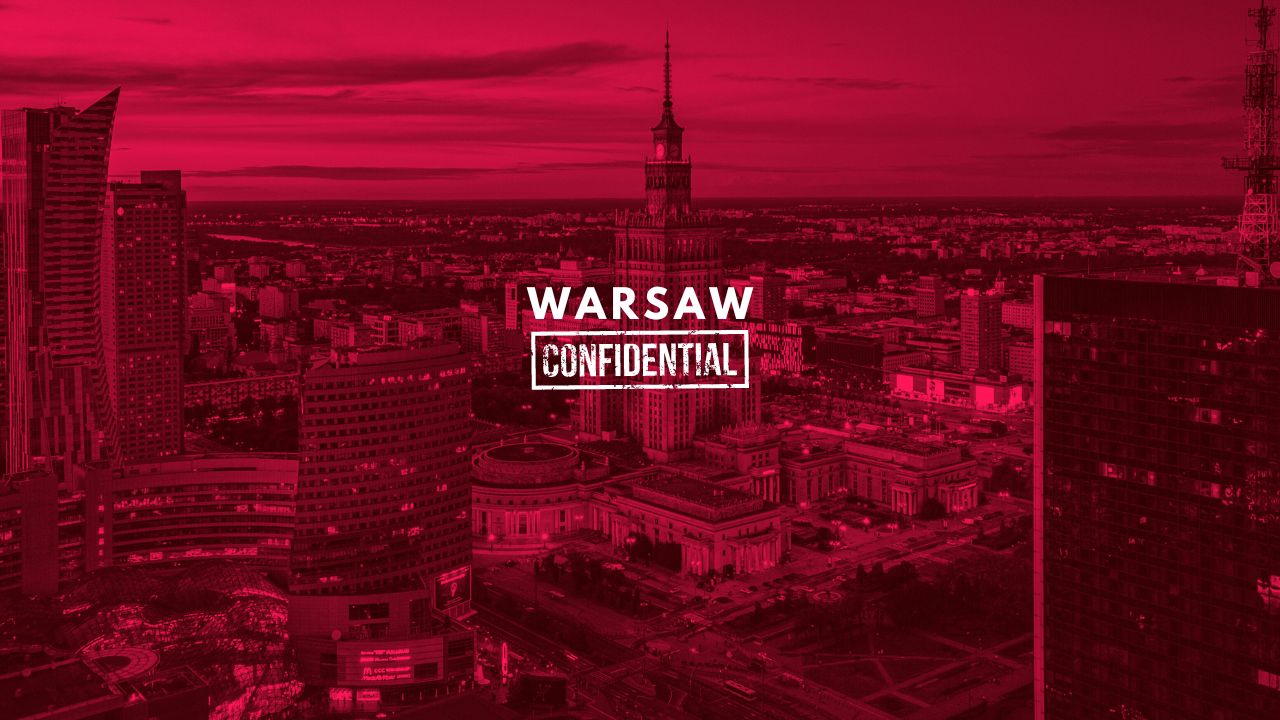
Tonight, I’ll tell you why I created Warsaw Confidential, what I’ve learned after dozens of conversations, and what this project is really fighting for.
Arriving in Poland (2011)
I arrived in Warsaw in 2011.
Twenty‑six. A student from Morocco. More courage than money. More hope than certainty.
The first winter felt like a test from the universe. My face burned in the wind; my ears stung; the snow turned sidewalks into mirrors. I remember standing at a tram stop, breath fogging the air, trying to read signs I couldn’t pronounce and faces I couldn’t yet understand.
Those first months were a string of small humiliations and tiny victories.
Ordering food with the wrong word and getting an entirely different dish.
Saying “dzień dobry” too quietly, then too loudly.
Laughing along when I barely caught the joke.
And yet—there were moments of unexpected tenderness.
The neighbor who held the door and taught me how to pronounce my street.
The classmate who corrected me gently and then invited me for coffee.
The first family dinner at a Polish home: pierogi steaming, pickles crunching, vodka poured with ceremony and warmth. I remember thinking: this is what belonging tastes like.
People sometimes ask: “Did you ever think about leaving?”
Of course I did. There were days I felt invisible, and other days I felt like I was only visible—visible in the way that makes you brace yourself on the tram; visible in the way that makes you practice answers in your head, just in case someone asks why you’re here.
And yes, I heard the sentence that every immigrant dreads.
“Go back to your country.”
It hits like cold metal. It freezes your tongue. It tries to shrink your life into a single line.
But the same week I heard those words, I also heard others:
“Masz dom tutaj.” You have a home here.
Life is like that. It rarely offers only one story.
The Question That Wouldn’t Let Go
As the years passed, I noticed something deeper than my own journey.
I noticed distance.
Poles on one side. Immigrants on the other.
Two groups living in the same city, often speaking about each other—but rarely speaking to each other.
Politicians touched that distance like a piano key and played it for votes. Media turned complexity into headlines. Algorithms served us more of what we already believed.
And that distance hardened into distrust.
Immigrants were told they were a threat, a problem to be managed.
Poles were told their country was under attack, their culture at risk, their safety fragile.
Both stories have shadows of truth. Both stories are incomplete.
Because here is another truth: behind every label is a person. Behind every migrant is a family. Behind every comment is a fear—or a hope—that deserves to be heard.
I looked at the distance and asked myself a simple question:
What if we built a table long enough for everyone to sit?
Not a battlefield. A table.
A place where you can bring your pride and also your criticism. Your love for Poland and also your questions about it. Your best story and your worst day—all of it welcome.
That question wouldn’t let me sleep. It kept following me on my walks through Śródmieście. It whispered to me at cafés in Praga. It sat with me on the Vistula when the city turned gold at sunset.
So I did the only thing I know how to do.
I started listening.
The Birth of Warsaw Confidential
Warsaw Confidential was born from listening.
It was never designed as a political project. It was designed as a human one.
A camera. Two chairs. Two microphones. And a promise:
Tell me your truth. I’ll hold it with respect. We’ll publish it with dignity.
Since that day, I’ve sat with immigrants from all over the world—Ukraine and France, Nigeria and Japan, the United States and Tunisia. I’ve sat with Poles—journalists and artists, entrepreneurs and students, mothers and veterans, rebels and romantics.
I’ve heard admiration that made me proud to live here: the safety of Warsaw nights; the faith of families; the stubborn kindness that shows up in crises.
I’ve heard criticism that made me pause: the bureaucracy that bruises ambition; the insecurity that turns difference into suspicion; the moments when history’s wounds bleed into the present.
I promised myself I would not sanitize these conversations.
No propaganda. No easy villains. No cheap heroes.
Because this isn’t a commercial for Poland, and it’s not a complaint box either.
It’s a mirror.
Sometimes a mirror shows beauty.
Sometimes a mirror shows what we need to fix.
Both are acts of love.
The Backlash—and the Lesson
When we published the first big compilation of immigrant voices, the comment section exploded.
Hundreds of you spoke with passion. Many defended Poland fiercely. Some rejected the very idea of immigrants. Others thanked us for finally letting them be heard.
I read every word.
Did it hurt sometimes? Yes.
Did it teach me something? Absolutely.
It taught me that people don’t want to be lectured. They want to be seen. They want to know that their love for Poland is recognized—that their fears are not dismissed as ignorance, but explored with respect.
So we adjusted—not our values, but our approach.
We put Polish voices side by side with immigrant voices.
We created space for contrast. For tension. For the entire spectrum.
Because truth is rarely a solo. It’s a choir.
What We Stand For
Warsaw Confidential stands on seven pillars that guide every episode we make:
Freedom—so people can speak without fear.
Beauty—so we remember what we’re protecting.
Creativity—so we can imagine a better future.
Integrity—so we refuse to twist stories for clicks.
Justice—so we don’t confuse strength with cruelty.
Honesty—so we publish what is said, not what is convenient.
Wisdom—so we listen longer than we talk.
These aren’t slogans for a wall. They’re promises we try to keep.
What This Podcast Is Not
Warsaw Confidential is not a campaign to “promote immigration.”
It’s not a shield for bad behavior or a denial of real problems.
We have published praise for Poland and we have published pain about Poland—because both belong to the truth. We will keep doing that.
This project is a long conversation with a city I love, and with the people who make it alive.
What This Podcast Is
It’s a door.
A door you can walk through if you’re curious.
A door you can knock on if you disagree.
A door you can hold open for someone who’s never been invited inside.
It’s also a record—of a moment in Poland’s history when identity, migration, culture, and courage collided. Years from now, I want someone to click on these videos and hear a city breathing.
Why Poland? Why Here?
Because Poland taught me about resilience.
About standing back up after history knocked you down.
About building again and again and again—even when the world said you couldn’t.
Because I have walked through Warsaw at dawn and felt the city praying.
Because I have seen strangers carry groceries for an old woman in winter.
Because I have been told, to my face, that I don’t belong—and then I have been welcomed with arms that made those words disappear.
Poland is not perfect. No country is. But it is alive. And if something is alive, it can grow.
The Craft Behind the Conversations
People often ask, “How do you choose your guests?”
I look for honesty. For humility. For the courage to say, “I don’t know,” and “I was wrong,” and “This hurt me,” and “This helped me.”
We prepare deliberately. We read. We research. We color outside the lines. We don’t ambush our guests, and we don’t protect them either.
We ask the question behind the question: What shaped you? What surprised you about Poland? What do you admire? What do you fear we are not talking about enough?
Then we get out of the way and let the conversation breathe.
On Criticism, Crime, and Complexity
Let’s address something directly.
When someone commits a crime, they must face the law. Period. Protecting people and seeking truth are not enemies—they are partners.
But using the worst actions of a few to define the lives of many is not justice. It is laziness—and it is also dangerous.
We do not excuse harm here. We also do not erase humanity.
In our studio, we practice a difficult form of conversation: we hold two truths at once.
Poland deserves safety and dignity.
Immigrants deserve safety and dignity.
If that sounds naïve, I invite you to watch the faces of our guests when they speak about this country. You will see what I see: people who are trying, failing, learning, and trying again. That effort is sacred.
A Word to Those Who Disagree
If you came here to argue—welcome.
If you came here to defend Poland—welcome.
If you came here to say, “I’m tired of being told I’m the problem”—welcome.
Your voice matters. Your love for this country matters.
All I ask is this: bring your best argument and your best heart at the same time. We will do the same.
A Word to Those Who Feel Invisible
If you are an immigrant watching this, and you’ve been quiet because you didn’t want trouble—your story is safe here.
If you are Polish and feel your concerns are mocked or dismissed—your story is safe here.
Warsaw Confidential does not hand out permission slips for pain. If it shaped you, it matters. If it’s true, it belongs.
Behind the Scenes: What This Work Costs—and Why It’s Worth It
People see the finished episode, but they don’t always see the invisible part.
The hours of research. The scheduling. The lighting. The editing. The nights we spend deciding how to cut three hours into one without losing the soul of the conversation.
Sometimes we get it wrong. We learn. We get better. We try again.
And then a message lands in my inbox: “Your episode made me call my mother.” “I finally understood my neighbor.” “I didn’t agree, but I listened.”
Those messages are fuel. They are proof that dialogue is not a luxury—it’s oxygen.
What I’ve Learned So Far
I’ve learned that belonging is not a place—it’s a practice.
That respect is a language you speak with actions before words.
That criticism without love becomes cruelty, and love without truth becomes denial.
I’ve learned that the strongest people I’ve met in Poland are often the quietest: the ones who show up, pay taxes, raise kids, build teams, keep promises, and don’t post about it.
And I’ve learned that this city—Warsaw—has a heartbeat that syncs with mine.
The Invitation
So here is my invitation.
If you have a story, bring it.
If you have a question, ask it.
If you have a challenge, speak it.
If you have a blind spot, admit it.
And if you have a friend you’ve avoided because you disagree—call them. Invite them for tea. Ask them what they’re afraid of. Tell them what you’re afraid of. See what happens when we refuse to be enemies.
The Mission, Plainly
Why did I start Warsaw Confidential?
Because I believe dialogue is the only bridge we have left.
Because I believe Poland deserves to be seen in full color.
Because I believe that the future of this country will be written not by the loudest insult, but by the bravest conversation.
If you believe that too—subscribe. Share this video. Leave a comment with your strongest disagreement and your deepest hope. Tell me where you think I’m wrong. Tell me what you wish I would ask next. Tell me what you love about Poland that I still haven’t learned.
This is not a show for perfect people. This is a table for humans.
I began this journey with loneliness. I continue it with gratitude.
To the Poles who welcomed me—you changed my life.
To the immigrants who trusted me with your stories—you honored me.
To everyone who wrote a kind comment when the thread went dark—you kept me going.
This is Warsaw Confidential.
Not a slogan. Not a side.
A conversation.
And we are just getting started.